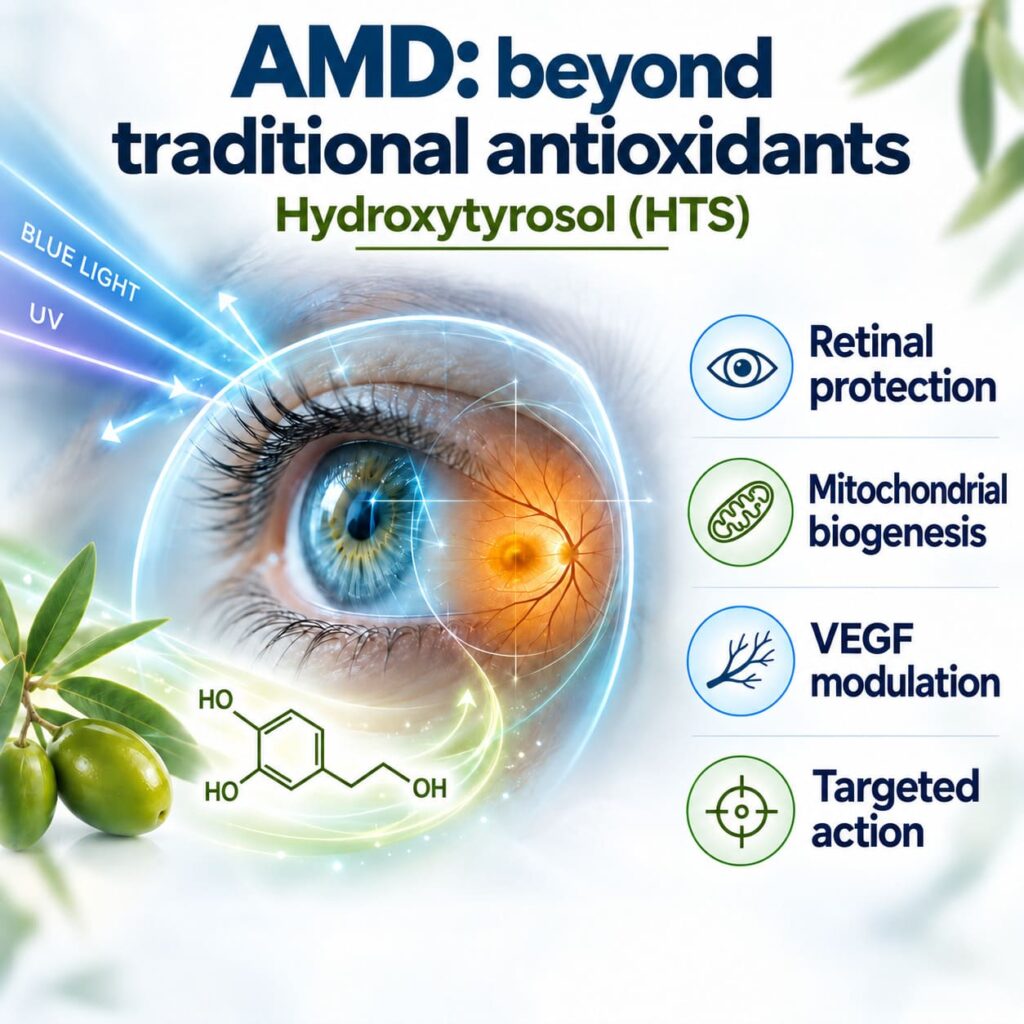
The human eye is a masterpiece of biological engineering, but today it is subjected to unprecedented stress. Between the relentless use of digital screens, chronic exposure to blue light and UV rays, and natural aging processes, our retina is under continuous attack.
The result? A drastic increase in oxidative stress, one of the main culprits behind retinal aging and the development of insidious conditions like Age-Related Macular Degeneration (AMD).
For years we relied on traditional antioxidants, but integrated ophthalmology is taking a decisive step forward. Today, research focuses on a natural molecule that is rewriting the rules of eye health support: Hydroxytyrosol.
Why Aren’t Common Antioxidants Enough Anymore?
The main challenge when dealing with eye health is bioavailability. Many antioxidant supplements and compounds, while theoretically valid, struggle to cross the strict biological barriers of our body to reach ocular tissues in adequate concentrations. If an antioxidant doesn’t reach where it’s needed, its usefulness is fundamentally compromised.
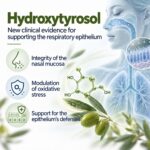
This is where Hydroxytyrosol (HTS) comes into play. Considered one of the most powerful polyphenols in nature—extracted primarily from extra virgin olive oil and olive leaves—it possesses a unique molecular structure. This characteristic grants it exceptionally high bioavailability, allowing it to penetrate deeply into tissues and act exactly where oxidative damage begins.
Mechanisms of Action: What Independent Studies Say
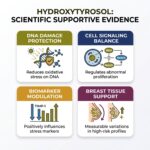
The validity of Hydroxytyrosol is not based on assumptions, but on solid clinical evidence. Recent studies conducted by independent research organizations have accurately mapped its extraordinary antioxidant properties, highlighting four fundamental mechanisms of action for maintaining visual function:
1. Advanced Retinal Cell Protection (RPE)
The retina is particularly vulnerable to free radicals. Trials on Retinal Pigment Epithelium (ARPE-19) cells have shown that Hydroxytyrosol can defend photoreceptors from oxidative damage induced not only by natural processes but also by highly toxic external agents, such as acrolein or hydrogen peroxide exposure.
2. Nrf2 Pathway Activation and Mitochondrial Biogenesis
As we age, our cells lose energy. HTS intervenes by directly stimulating the Nrf2 pathway, a biological “switch” that activates the body’s endogenous antioxidant systems. Furthermore, it promotes mitochondrial biogenesis—the creation of new cellular “power plants”—counteracting the energy deficit that accompanies aging.
3. VEGF Modulation
A critical factor in the progression of AMD in its neovascular form is the abnormal growth of new blood vessels, driven by a receptor called VEGFR-2. Hydroxytyrosol metabolites have been shown to support the containment of this angiogenic response, offering a natural barrier and fundamental support for maintaining ocular balance.
4. Targeted Action Against Retinal Degeneration
Scientific reviews dedicated to nutri-ophthalmology are clear: olive polyphenols, and HTS foremost, play a specific and documented role in mitigating states of neuroinflammation, creating an unfavorable environment for visual tissue degeneration.
Systemic Supplementation: The New Standard for Vision Professionals
In light of this scientific evidence, it is clear that a winning strategy requires a synergistic approach. Systemic supplementation of Hydroxytyrosol—especially when combined with key nutrients like lutein, zeaxanthin, and Omega-3 fatty acids—now represents a top-tier opportunity for those seeking high-quality visual well-being support.
It is no longer just about fighting free radicals generically; it is about providing the ocular system with highly penetrating, targeted defense tools.
FENÒLIA®’s Commitment to Integrated Ophthalmology
The FENÒLIA® products are born exactly from these rigorous foundations of independent scientific literature.
We have chosen Hydroxytyrosol as the reference molecule for all our formulations, with a special focus on our capsules for systemic supplementation. Our goal is to provide industry professionals and their clients with antioxidant support that accepts no compromises on bioavailability and efficacy, ensuring maximum health benefits for long-term eye protection.
Scientific Sources and Clinical Insights (by independent research organizations):
🔹 Protective effects of Hydroxytyrosol against oxidative damage in retinal pigment epithelial cells:
🔗 https://pmc.ncbi.nlm.nih.gov/articles/PMC4965131/
🔹 The role of olive polyphenols in mitigating retinal degeneration and neuroinflammation:
🔗 https://www.mdpi.com/2304-8158/11/4/526
🔹 Induction of mitochondrial biogenesis and activation of the Nrf2 antioxidant pathway:
🔗 https://pubmed.ncbi.nlm.nih.gov/20149621/
🔹 Mechanisms of protection against environmental toxins and angiogenic response modulation:
🔗 https://pubmed.ncbi.nlm.nih.gov/20938484/